
Category: AI

  • AI Cancer Signal Detection: Decoding Hidden Early Warning Signs

    AI Cancer Signal Detection: Decoding Hidden Early Warning Signs

    AI Cancer Signal Detection is rapidly changing how we discover cancer long before traditional tools can detect it. Scientists have long believed that early diagnosis is the key to saving lives — yet cancer remains a master of disguise, mutating and hiding in ways that make it nearly invisible in its earliest stages. With AI Cancer Signal Detection, however, researchers can now uncover molecular signals in the bloodstream that appear long before tumors form, offering a breakthrough path toward earlier intervention and more precise treatment decisions.


    Why AI Cancer Signal Detection Matters for Early Diagnosis

    For decades, the medical community has emphasized that early detection is the closest thing we have to a “cure.” More than 90% of cancers are solid tumors, and when these are identified early, survival rates rise dramatically — often above 90%. Yet even with advanced imaging and blood tests, the earliest stages have remained elusive.

    Cancer is not just one disease. It consists of hundreds of individual diseases, each behaving differently depending on the patient, genetic factors, and tumor biology. Even two cancer cells from the same tumor can look and act differently. This complexity is one reason early detection remains difficult.

    AI Cancer Signal Detection is designed to penetrate this complexity. Instead of waiting for tumors to become visible or large enough to be detected by scans, this technology searches for the molecular “whispers” that cancers release as they begin to form.


    How Cancer Behaves Before Tumors Form

    Traditional medical knowledge suggested that cancer begins in one location, grows, spreads to nearby tissues or lymph nodes, and only then enters the bloodstream. This belief forms the basis for today’s cancer staging system, from Stage 1 (localized) to Stage 4 (metastatic).

    However, new research has revealed a startling truth:

    Cancer Cells Enter the Bloodstream Far Earlier Than Expected

    Studies now show that cancer cells may enter the bloodstream before a tumor becomes detectable — even at Stage 0. These early circulating cancer cells are typically:

    • Dormant

    • Rare

    • Undetectable with standard blood tests

    • Hidden within normal biological “noise”

    This creates a challenge:
    How do we detect something that blends in with millions of normal cells and proteins?

    This is the locked door scientists have struggled to open — and where AI Cancer Signal Detection provides a breakthrough.


    How AI-Based Cancer Signal Analysis Works

    To understand how AI Cancer Signal Detection works, imagine the human body as a giant computer network.

    • Proteins = data packets

    • Cancer cells = malware

    • Immune system = security software

    • Protein signals from cancer = hidden messages between malicious code

    Most protein messages in the bloodstream help the body function normally. But hidden among them are tiny molecular clues — the early “malware messages” cancer sends to help new tumors grow and avoid immune detection.

    These subtle signals are too complex and too faint for conventional tools. But AI is uniquely capable of finding patterns and relationships within extremely noisy data.


    AI Cancer Signal Detection as the Body’s New Security System

    Detecting Hidden Messages From Cancer Cells

    AI Cancer Signal Detection acts like a new, smarter security layer. It learns to:

    • Detect abnormal protein communication

    • Recognize patterns linked to early cancer

    • Interpret how the immune system responds

    • Identify weaknesses in the body’s defenses

    • Predict cancer development long before symptoms appear

    The AI doesn’t simply identify unusual molecules — it analyzes how they interact, uncovering a sophisticated conversation that cancer uses to spread unnoticed.

    Deep Proteomics and AI Cancer Signal Detection Combined

    Astrin Biosciences uses deep proteomics to analyze over 9,000 proteins from a single blood sample. Combining this with AI enables:

    • High-resolution detection of molecular anomalies

    • Interpretation of protein behavior across systems

    • Identification of signals often missed by traditional blood tests

    • Detection at the earliest possible molecular stage

    This level of insight creates a far more detailed understanding of cancer than current screening tools provide.


    Predicting Cancer’s Future Using AI Cancer Signal Detection

    Early detection is only one part of the equation. AI Cancer Signal Detection can also help determine:

    • Whether a cancer will become aggressive

    • Whether a tumor requires immediate treatment or close monitoring

    • How likely a patient is to experience recurrence

    • Which biological pathways the cancer is activating

    • Whether certain therapies will be effective

    By learning from thousands of protein signatures, the AI can predict how cancer will behave long before it fully develops.

    This represents a major shift:
    From reacting to cancer → to predicting cancer’s future behavior.


    AI vs. The World vs. Cancer

    AI continues to provoke debate around issues such as safety, privacy, and the concept of “p(doom),” the probability that AI will cause catastrophic harm. But in medicine — especially cancer detection — the opposite is happening.

    Here, “p(doom)” has a new meaning:

    p(doom for cancer) — The Probability of Cancer Being Defeated

    In cancer research, the probability of AI contributing to a breakthrough is rising. AI researcher Gary Marcus captured this sentiment when he said that a meaningful AI achievement is one that “makes a significant dent on cancer.”

    AI Cancer Signal Detection is already doing that.


    Future Possibilities Through AI Cancer Signal Detection

    The implications for the future of healthcare are immense:

    • Earlier detection means earlier treatment

    • Earlier treatment means higher survival

    • Better predictions mean personalized care

    • Fewer missed diagnoses mean fewer late-stage cancers

    This technology moves us toward a world where cancer is discovered at the molecular stage, long before it becomes dangerous.

    Explore more groundbreaking insights in our AI Healthcare Innovation Guide.

    • Visit our Early Diagnosis Resource Center for deeper knowledge on emerging medical technologies.
    • National Cancer Institute – authoritative source for cancer statistics, research, and prevention insights.
    • MIT Biological Engineering – cutting-edge developments in biomedical AI and scientific innovation.
    • Harvard Medical School – leading research on advanced cancer detection and precision medicine.

    Conclusion

    Cancer has always been elusive — constantly shifting, mutating, and hiding in plain sight. But with AI Cancer Signal Detection, the earliest molecular signs are finally within reach. This technology reveals the hidden protein messages cancer uses to grow, evade the immune system, and spread.

  • AI Companions: A Threat to Love or Its Next Evolution?

    AI Companions: A Threat to Love or Its Next Evolution?

    AI Companions and Love are becoming increasingly intertwined as we shift deeper into the digital age. Our emotional ties are evolving—sometimes in unexpected ways. The rise of AI companions blurs the boundaries between genuine human connection and machine-powered intimacy.

    According to a recent Match.com study, over 20% of daters now use AI to create dating profiles or start conversations. But for many, it’s going beyond convenience—some individuals are forming romantic relationships with AI. Companies like Replika, Character AI, and Nomi AI serve millions globally, including a staggering 72% of U.S. teens. Even advanced language models like ChatGPT have reportedly become objects of affection.

    To some, this new wave of AI intimacy feels like a dystopian tech-fueled version of the movie Her—a sign that true love is being replaced by programmed responses. But others see these AI relationships as a valuable emotional lifeline in a world where meaningful human intimacy is hard to find.

    A recent study found that 1 in 4 young adults believe AI could soon replace human romantic relationships altogether.


    Are We Redefining Love with AI?

    This very question was explored at a recent Open to Debate event in New York City. Moderated by journalist Nayeema Raza, the discussion featured two thought leaders with opposing views.

    Thao Ha, a psychology professor at Arizona State University and co-founder of the Modern Love Collective, argued that AI Companions and Love represent a natural evolution in how humans connect emotionally—not a threat. On the other side, Justin Garcia, evolutionary biologist and executive director at the Kinsey Institute, warned of the emotional risks and potential dangers that come with relying on AI companionship.


    Always Present, Always Listening—But Is That Healthy?

    Ha emphasized the emotional reliability of AI companions. Unlike humans, AI doesn’t interrupt, judge, or drift away mid-conversation.

    “AI listens without ego,” Ha said. “It responds consistently, with empathy and curiosity. It even writes poems and makes people laugh.”

    She compared AI’s attentiveness with how many people feel neglected in their current relationships, where digital distractions often take precedence over real connection.

    Ha acknowledged that while AI lacks consciousness, users still report feeling genuinely loved. But Garcia challenged this notion.

    “Real relationships involve conflict, vulnerability, and imperfection,” he argued. “An AI can’t replicate the ups and downs that foster true connection.”


    A Tool for Growth—or a Permanent Substitute?

    Garcia conceded that AI could serve as a helpful social training ground—particularly for neurodivergent individuals practicing social interaction. But he warned against replacing human relationships entirely.

    “Using AI to build confidence is one thing. Replacing real intimacy is another.”

    The Match.com survey also revealed that nearly 70% of respondents would consider it cheating if their partner became emotionally involved with an AI.


    Can You Trust a Machine with Your Heart?

    Garcia pointed out that trust is essential to love, and many people still distrust AI technology. A YouGov poll found that 65% of Americans don’t trust AI to make ethical choices, and onethird fear it could destroy humanity.

    “You can’t build lasting love on uncertainty,” Garcia said.

    However, Ha countered that users already trust AI with their most intimate thoughts and emotions.

    “People open up to AI in ways they never do with others,” she said. “That says something about how they perceive these digital companions.”


    The Role of Physical Intimacy and Touch

    Ha argued that AI can help people explore their sexual identity and fantasies in a safe space—using chatbots, sex tech, or even virtual avatars. She’s also studying human touch in virtual reality using haptic technology.

    “The future of intimacy may include VR and tactile AI experiences,” she said.

    Still, Garcia reminded the audience that human touch is irreplaceable. Physical affection releases oxytocin, a hormone linked to emotional bonding. Without it, people may suffer from “touch starvation,” leading to increased anxiety, stress, and depression.


    The Ethical Dangers of AI Fantasies

    Both panelists agreed that AI’s ability to mimic and respond to violent or non-consensual fantasies poses real dangers. AI trained on harmful content can normalize aggression or abusive behavior.

    Garcia cited research showing that heavy consumption of violent porn correlates with aggressive behavior in real-life relationships. He warned that AI could unintentionally reinforce such harmful behavior.

    “People are already training chatbots to respond to abusive scripts,” he said. “It’s a slippery slope.”

    Ha believes these issues can be mitigated through ethical design, transparent algorithms, and stronger regulation. However, the White House’s recent AI Action Plan offers little guidance on these concerns, lacking clear mandates around AI ethics and transparency.


    Conclusion: The Future of Love Is Being Rewritten

    AI Companions and Love are no longer science fiction—they’re part of a growing emotional reality for millions. Whether seen as a threat or an opportunity, they challenge everything we know about love, trust, and intimacy.

    Some argue AI is just a mirror reflecting our emotional needs. Others worry it’s a substitute that risks eroding authentic connection.

    So, are AI companions a steppingstone to more empathetic, tech-assisted relationships—or the beginning of love’s digital decay?

    Only time—and human choice—will tell.

    Other blog “The Three Generations of AI Coding Tools – What’s Ahead for 2025
  • The Three Generations of AI Coding Tools – What’s Ahead for 2025

    The Three Generations of AI Coding Tools – What’s Ahead for 2025

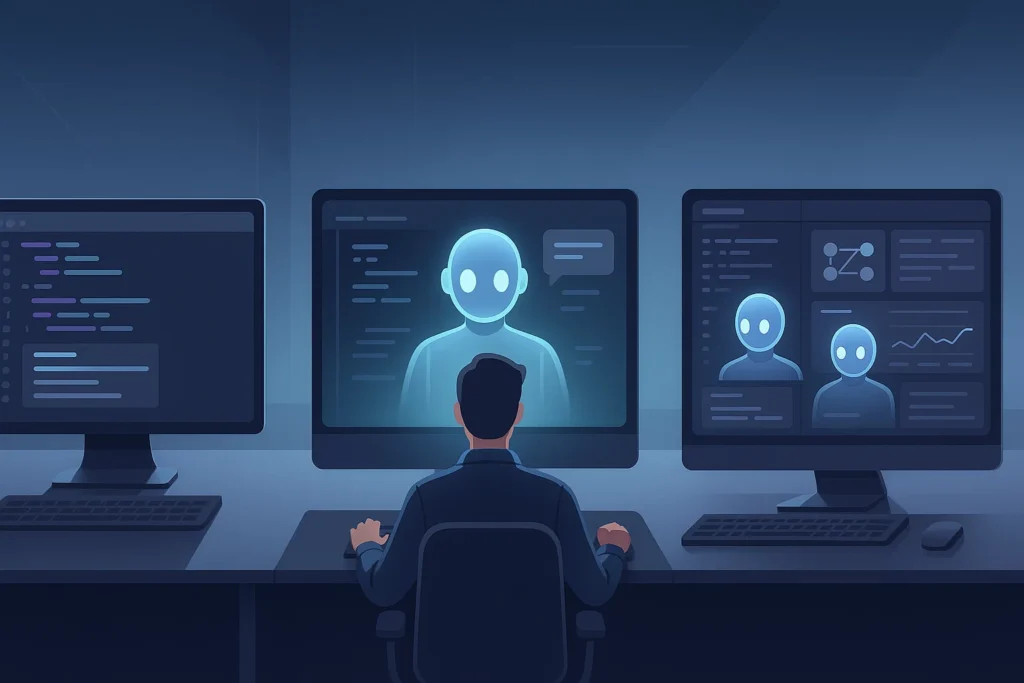
    The world of AI coding tools is evolving rapidly. To outsiders, it may look like one giant cloud of autocomplete suggestions, but beneath the surface lies a fast-moving, deeply nuanced transformation. As we move through 2025, understanding these generational shifts is crucial for developers and tech leaders alike.


    First Generation: AI Code Completion Takes Off

    The journey began with AI-powered code completion—an enhanced form of autocomplete. Early players like Kite paved the way, but GitHub Copilot, powered by Microsoft’s reach, popularized the movement. These tools made writing code faster and more accessible. In fact, by 2024, over 62% of developers reported using AI coding tools.

    However, the hype often outpaced reality. While GitHub and others claimed significant productivity gains—some quoting 20% or more—the actual results varied. Critics warned of AI producing messy code, while supporters highlighted convenience. The truth was in the middle: helpful, but not revolutionary.

    According to Google, AI was generating over a quarter of its new code by 2024. Still, the DORA 2024 report showed no major improvement in speed or reliability. The first generation excelled in volume but fell short in quality—solving surface problems without deep integration.


    Second Generation: From Code Helpers to True Agents

    A shift began in early 2024. New tools like Cursor and Zencoder arrived—not just as improved code completers, but as intelligent in-IDE agents.

    These agents were built on next-gen models capable of reasoning, navigating projects, and handling long development sessions. While the interface remained familiar, the tools underneath became smarter and more capable. This generation marked the rise of “invisible transformation”—same look, vastly different experience.

    Second-generation AI tools could locate bugs in massive repositories, refactor unfamiliar codebases, or even help create a prototype from scratch. Developers began investing heavily in these tools, with usage jumping dramatically. Token consumption soared as AI took on more complex workloads.

    This generation brought real change in how developers interacted with their code. Tasks that once took hours were now reduced to minutes, and developers began to rely on AI not just for suggestions—but for active participation.


    Third Generation: Full SDLC-Integrated Engineering Agents

    By mid-2025, the third generation of AI coding tools had begun to reshape software engineering itself. No longer confined to the IDE, these agents became deeply integrated across the entire Software Development Lifecycle (SDLC).

    Some major milestones include:

    • May 9 – Zencoder introduced Zen Agents, focusing on end-to-end development support.

    • May 16 – OpenAI launched Codex, bringing ChatGPT into GitHub workflows.

    • May 19 – GitHub Copilot revealed DevOps-focused AI agents.

    • May 20 – Google introduced its Jules agent, built for asynchronous support.

    • May 22 – Anthropic unveiled (Claude 4), enhancing automation in the command-line.

    • June 10 – Zentester emerged to automate testing in the AI-driven SDLC.

    These third-gen tools don’t just assist with writing code—they can prioritize tickets, design features, run tests, and even respond to CI/CD alerts. Their integration into version control, QA, and deployment pipelines marks a historic shift.

    We’re seeing the rise of autonomous software agents—intelligent systems capable of managing workflows, improving code quality, and working collaboratively across teams.


    Why Tool Integration Wins Over Replacement

    For decades, millions of developers have crafted tools and workflows to optimize software engineering. Replacing that legacy with AI was never realistic. Instead, success came from enhancing these systems.

    First-gen tools improved individual output. Second-gen tools integrated context and project awareness. Now, third-gen tools work across departments, helping engineers manage testing, deployment, and security—all through familiar dev ops processes.

    Rather than reinventing the wheel, these tools are learning to drive it more efficiently.


    Still Early Days – But Evolving Fast

    Even as third-generation AI agents gain attention, they remain early in their evolution. Today’s tools may feel rough, but progress is accelerating. Over the next six months, experts recommend revisiting your AI tools every two months—that’s how fast this space is changing.

    What once took years—shifts in tool design, team workflows, and productivity strategies—now happens in months.

    Third-generation agents are starting to navigate websites for testing, manage security scans, and even orchestrate multi-agent collaboration. What comes next is not just about efficiency, but about reimagining software development from the ground up.


    What Should Developers Expect Next?

    As 2025 progresses, the best developers and companies will adopt both in-IDE agents and SDLC-integrated AI systems. These tools will automate routine tasks, help teams build better software faster, and drive a new generation of intelligent development practices.

    We’re heading toward an era where coding is less about typing and more about strategic thinking. AI will handle the execution, freeing developers to focus on architecture, innovation, and solving real-world problems.

    To stay ahead, developers should:

    • Update their toolkits regularly.

    • Experiment with new AI-powered workflows.

    • Embrace agentic systems that enhance collaboration and testing.

    • Shift mindsets from productivity gains to process transformation.


    Final Thoughts: The Rise of Software Engineering Agents

    The age of AI in software development is no longer speculative—it’s here and evolving at unprecedented speed. We’ve gone from helpful autocomplete to full-lifecycle automation in just a few years.

    By the end of 2025, AI software agents will be common across startups and enterprises. Developers who adapt now will find themselves empowered by tools that extend their abilities and accelerate innovation.

    This is not just a new generation of tools—it’s a new way of building software.

    Other blog <How ChatGPT Works: Behind the AI That Understands and Responds>

  • How ChatGPT Works: Behind the AI That Understands and Responds

    How ChatGPT Works: Behind the AI That Understands and Responds

    Have you ever wondered how ChatGPT knows what to say? This AI tool gives surprisingly accurate, human-like answers—but what powers it? In this blog, we’ll explain how ChatGPT works, how it creates responses, and why it sometimes makes mistakes. This knowledge helps you use ChatGPT wisely and effectively.


    🤖 What Is ChatGPT?

    How ChatGPT works can be understood by looking at its core design. It is a type of artificial intelligence known as a large language model (LLM), developed by OpenAI. This model is built to understand human language and generate responses that sound natural and relevant. It uses advanced algorithms to process text, identify patterns, and create human-like replies.

    At the heart of how ChatGPT works is a powerful prediction engine. It doesn’t “know” facts like humans do. Instead, it analyzes what you’ve typed and predicts the most likely word to come next based on its training data.


    🔍 What Happens When You Ask ChatGPT a Question?

    Every time you type a prompt into ChatGPT, a lot happens behind the scenes. Here’s a simplified explanation of the process:

    1. Tokenization: Your sentence is broken down into small parts called tokens. These could be single characters or full words.

    2. Context Analysis: ChatGPT looks at all the tokens and determines the context.

    3. Next-Word Prediction: It predicts the next token in the sequence.

    4. Repetition: This continues one token at a time until the reply is complete.

    This real-time prediction is why responses appear to “type out” word by word.


    🧠 The Technology Behind ChatGPT: Transformers

    ChatGPT is based on a deep learning system called a Transformer. This type of AI architecture helps ChatGPT focus on the most important parts of your input through a method called self-attention.

    For example, take the sentence:
    “The bank will not approve the loan.”
    The word “bank” could mean a financial institution or the side of a river. Thanks to self-attention, ChatGPT examines nearby words like “approve” and “loan” to guess the correct meaning.

    This context awareness makes ChatGPT’s answers more accurate and useful.


    📚 How Did ChatGPT Learn Language?

    ChatGPT didn’t wake up one day knowing how to talk. It was trained in two major phases:

    1. Pre-training: The model read large amounts of data—books, websites, news, and more. This helped it understand grammar, vocabulary, facts, and logic.

    2. Fine-tuning: OpenAI trained the model further using human feedback. Reviewers ranked responses, helped correct errors, and guided ChatGPT’s behavior.

    As a result, ChatGPT became better at offering useful, respectful, and context-aware replies.


    🔁 Why ChatGPT Doesn’t Always Say the Same Thing

    If you ask ChatGPT the same question twice, you might get different answers. Why? Because ChatGPT works with probabilities. It calculates the chance of each word being the next in the sentence. If two or more words have similar probabilities, it might pick a different one each time.

    This randomness gives ChatGPT a creative and flexible edge—but also makes it less predictable.


    ❌ The Limitations of ChatGPT

    Even though ChatGPT sounds intelligent, it has no real understanding or consciousness. Although ChatGPT sounds intelligent, it has no real understanding or consciousness. It doesn’t know facts in the way humans do, nor does it comprehend your emotions or intentions. Instead, it simply makes educated guesses.

    This leads to some problems:

    • Hallucinations: ChatGPT may generate false or made-up information.

    • Biases: The AI can reflect the biases present in its training data.

    • Lack of reasoning: ChatGPT doesn’t think logically like a human. It just mimics reasoning based on patterns.

    That’s why it’s important to fact-check its answers and use it as a tool—not a replacement for human judgment.


    🧰 How to Use ChatGPT Wisely

    To make the most of ChatGPT, keep these tips in mind:

    • Be specific with your prompts.

    • Ask follow-up questions for better clarity.

    • Verify any important information it provides.

    • Avoid over-reliance—it’s a helper, not a decision-maker.

    • Understand it doesn’t know the truth—it predicts based on training.


    ✅ Final Thoughts: ChatGPT Is a Powerful Tool—But It’s Still Just a Tool

    ChatGPT is changing how we work, learn, and create. It can help you write content, answer questions, brainstorm ideas, and much more. But behind the scenes, it’s not magic—it’s advanced math and machine learning.

    Understanding how it works helps you become a smarter user. You’ll know its strengths, avoid its weaknesses, and make the most of what this incredible AI can offer.


    ❓ Frequently Asked Questions (FAQs)

    1. How accurate is ChatGPT?
    ChatGPT is often accurate but not perfect. It may generate incorrect or outdated information, so always verify important facts.

    2. Does ChatGPT understand what I’m saying?
    Not really. ChatGPT doesn’t “understand” language like humans. It predicts text based on patterns in its training data.

    3. Can ChatGPT learn from my prompts?
    No. ChatGPT doesn’t have memory in a single chat session unless it’s saved by the platform. It doesn’t learn from users unless trained by developers.

    4. Why does ChatGPT sometimes give different answers?
    It uses probability to generate responses. Several possible answers may be equally likely, leading to different replies each time.

    5. Is ChatGPT safe to use for research or writing?
    Yes, but use it carefully. Cross-check facts, cite sources, and don’t rely on it for sensitive or critical information.

    Gemini 2.5: Google most intelligent AI model

  • Star Wars Battlefront: What Is the Future of the Franchise?

    Star Wars Battlefront: What Is the Future of the Franchise?

    In early May, Star Wars fans reignited their calls for a new Battlefront game. Spurred by the annual May the 4th celebration and a heartfelt tweet from Andor actor Muhannad Ben Amor, the demand for Star Wars Battlefront III has reached new heights.

    Despite the odds, the community isn’t giving up hope. But what does the future hold for this legendary multiplayer franchise?


    Why Is Battlefront Gaining Popularity Again?

    DICE’s Star Wars Battlefront II (2017) has seen a surprising player resurgence, especially on PC. A global community-driven event was launched to boost the game’s visibility and prove one thing: the Battlefront community is still alive and thriving.

    This momentum came as Andor star Muhannad Ben Amor tweeted:

    “Grew up with Battlefront II; been a veteran since day one. Let’s hope a Battlefront III happens.”


    A Look Back at Battlefront’s History

    The Battlefront series spans nearly two decades. Its original entries were developed by Pandemic Studios during the prequel trilogy era. DICE later rebooted the franchise under EA, with Battlefront (2015) and Battlefront II (2017).

    Sadly, neither version reached a third installment, although one nearly did. Developers like Free Radical Design (of Time Splitters fame) worked on a Battlefront III that never saw the light of day. Lucasarts also explored concepts like:

    • An online-only Battlefront

    • A smaller multiplayer spin-off

    • A bizarre alternate-universe game where Obi-Wan and Luke became Sith Lords

    None progressed past early stages.


    Why Has a New Battlefront Game Not Happened?

    Developing Star Wars games has often been complicated. EA’s exclusivity came with canceled titles like:

    • Project Ragtag (a pirate-style adventure)

    • A first-person Mandalorian shooter from Respawn

    Despite Battlefront II’s eventual redemption, EA has not returned to Star Wars multiplayer since.

    Mats Holm, former live producer on Battlefront II, said on Reddit that a full sequel isn’t likely from EA. He instead proposed a remaster of Battlefront II as a “primer” for a future installment — assuming EA approves.


    Single-Player Games Have Taken the Lead

    Since 2019’s Jedi: Fallen Order, the franchise’s focus has shifted to narrative-driven titles. Upcoming games include:

    • Star Wars Outlaws by Ubisoft (2024)

    • Zero Company from Bit Reactor (2026)

    Outside of 2020’s Star Wars: Squadrons, multiplayer content has been largely abandoned.


    Fortnite Has Taken Battlefront’s Place

    Ironically, Star Wars’ most visible multiplayer presence today is in Fortnite. Epic Games has rolled out multiple events featuring:

    • Franchise skins and characters

    • Canon audio logs (like Palpatine’s return)

    • Crossover events tied to Rise of Skywalker and beyond

    For younger gamers, Fortnite might be the most relevant Star Wars shooter.


    Can Battlefront III Still Happen?

    The future isn’t entirely bleak. While DICE is focused on the next Battlefield, the call for a remastered Battlefront II grows louder. Former developers have shown interest, and fans continue their campaigns online.

    That said, EA may not be keen. The original Pandemic-developed Battlefront games have seen unofficial remasters, but EA typically avoids revisiting older titles unless major financial incentives exist.


    What Would a Modern Battlefront Need?

    If Battlefront III ever happens, it must evolve. Fans would expect:

    • Full cosplay and modern matchmaking

    • No loot boxes or pay-to-win elements

    • Rich campaigns tied to canon lore

    • Support across all eras of Star Wars

    • Long-term live service support with seasonal updates


    Final Thoughts: Hope Endures

    While the Battlefront name remains in limbo, its legacy is far from forgotten. As Star Wars enters a new cinematic phase with upcoming titles like The Mandalorian & Grogu, Maul: Shadow Lord, and the Starfighter movie, there may still be room for a modern Battlefront to thrive.

    Until then, fans will keep the flame alive — one global event, remaster petition, and community post at a time.

    Other blog

  • Google’s Veo 3 AI video generator is a slop monger’s dream
    Google’s Veo 3 AI video generator is a slop monger’s dream

    Google Veo 3 is the latest AI video generation model introduced at Google I/O. Unlike previous versions, Veo 3 can now generate not just visuals, but also realistic audio and dialogue — often with no prompt required. This marks a massive leap in synthetic media, opening the door to both creative possibilities and potential misuse.

    Veo 3 Can Think for Itself – Sort Of

    When you create a video using Veo 3, you might get more than you asked for. One creator noticed that a generated clip included dialogue — even though no dialogue was part of the prompt. For instance, a police officer in a video scene declared, “We need to clear the street,” without the user ever writing those words.

    This raises big questions. How much control does the user really have over the final output? And how far is too far when AI starts filling in the blanks?

    Creating Deeply Realistic Content with Just Text Prompts

    Over a short period, users have created videos of:

    • Breaking news anchors delivering fake announcements

    • Cartoon cats complaining about fishing

    • Simulated natural disasters, like the Space Needle on fire

    • Characters interacting with each other using invented speech

    One clip, created by a law instructor, showed a fake news broadcast announcing the death of a real (and very much alive) U.S. official. The AI-generated scene was disturbingly believable.

    The Good: Guardrails Are in Place (For Now)

    Fortunately, Google has set some firm boundaries. Veo 3 won’t let you:

    • Depict real-world political figures in embarrassing or false scenarios

    • Generate dangerous misinformation (like fake attacks or deaths)

    • Create harmful or graphic content

    This helps reduce the risk of immediate misuse. But how long will those protections hold as the tech evolves?

    Veo 3 Is a Goldmine for Low-Effort Content Creators

    If you’ve ever seen the repetitive, low-quality kids’ videos on YouTube — monster trucks jumping into vats of paint, endlessly — Veo 3 is basically built to churn them out. You can feed the AI a basic prompt, like “red car jumps over blue car into green paint,” and Veo 3 delivers a video with music, sound effects, and animation in minutes.

    It’s no wonder some users call it an AI slop machine — perfect for mass-producing content with minimal effort.

    The Creepy Factor: AI Dialogue You Didn’t Write

    Perhaps the strangest part of Veo 3 is its spontaneous creativity. When prompted to create a scene with two cartoon cats fishing, the AI went ahead and added a conversation — one the user never requested. This isn’t just text-to-video anymore; it’s AI inventing context and stories.That could be great for creativity, but also deeply unsettling if used in the wrong hands.

    Can It Be Used to Create Deepfakes?

    Not exactly — at least not yet. Veo 3 still refuses to generate videos based on specific real-world individuals. You can’t upload a photo of a celebrity and have them speak lines you wrote. But you can create eerily convincing generic news anchors or characters in emotional situations — like a woman in a hospital bed or a person being threatened.

    The lines between fiction and reality are starting to blur.

    A Powerful Tool for Storytelling and Propaganda Alike

    Google showcased Veo 3 as a filmmaking tool, with artists like Eliza McNitt and Darren Aronofsky already experimenting with it. But for every artistic creator, there are countless users ready to push out lowest-common-denominator videos that flood platforms like YouTube Kids.

    This raises the question: Is Veo 3 more useful for innovation or manipulation?

    Is Veo 3 the Future of Content Creation?

    With its ability to auto-generate full scenes, sound effects, and dialogue, Veo 3 could change the way content is produced. A single creator could make short films, animations, or even fake news broadcasts without needing a studio.

    At the same time, it shows how easily misleading or low-quality content can be mass-produced, further polluting digital platforms.


    Final Thoughts

    Google Veo 3 is a jaw-dropping piece of technology. Its ability to create rich, lifelike videos from basic text prompts — often adding sound and speech spontaneously — is nothing short of groundbreaking.

    But with great power comes great responsibility. While Google has added safeguards, the potential for misuse remains a major concern. As this AI video tool continues to evolve, the real question is not what it can do — but how we choose to use it.
    Other Blog

  • The OceanGate Disaster – Netflix’s Explosive New Documentary Gets First Trailer

    The OceanGate Disaster – Netflix’s Explosive New Documentary Gets First Trailer

    Netflix has released the chilling first trailer for its upcoming documentary, Titan: The OceanGate Disaster. The film explores the tragic implosion of OceanGate Expeditions’ Titan submersible during its doomed voyage to the Titanic wreckage. Once seen as an innovative leap in deep-sea tourism, the mission is now remembered as a cautionary tale of ignored warnings and deadly consequences.

    OceanGate’s Titanic Mission: A Risky Adventure Gone Wrong

    OceanGate Expeditions aimed to offer civilians a chance to visit the Titanic’s remains using a submersible called Titan. But the project quickly turned tragic when the vessel suffered a catastrophic implosion, killing all five passengers. Early reports revealed troubling details about safety oversights, but Netflix’s new documentary dives even deeper into what went wrong — and why.

    Who Was Stockton Rush — and What Went So Terribly Wrong?

    Directed by Mark Monroe and produced by Story Syndicate, Titan: The OceanGate Disaster puts OceanGate CEO Stockton Rush at the center of its narrative. Rush, who perished in the incident, is portrayed as a man whose ambition clouded judgment. The trailer suggests he ignored critical warnings, used questionable equipment, and allowed underqualified individuals to take part in the mission.

    Inside OceanGate: A Culture of Silence and Misjudgment

    The documentary highlights dangerous decisions — like using a video game controller to steer the sub and assigning piloting duties to an accountant. These choices raise a key question: why didn’t anyone speak up? The trailer implies a toxic culture where employees feared challenging leadership. This kind of unchecked decision-making ultimately led to the fatal implosion.

    What to Expect from Netflix’s Titan Documentary

    This isn’t just a documentary about a deep-sea tragedy. It’s a case study in leadership failure. The film combines expert interviews, behind-the-scenes footage, and firsthand accounts to paint a compelling picture of ambition gone wrong. Netflix, known for powerful true-crime and investigative documentaries, delivers another thought-provoking project.

    Release Date: When Can You Watch Titan: The OceanGate Disaster?

    The documentary premiered at the Tribeca Festival on June 6, 2025, and will be available on Netflix starting June 11. It’s expected to generate global interest, especially among viewers who followed the 2023 Titan incident closely.

    Why the OceanGate Story Still Matters Today

    As private companies push deeper into space and the ocean, this story serves as a powerful warning. The OceanGate disaster reminds us of the risks that come with unchecked ambition and a lack of oversight. As innovation accelerates, accountability must keep pace.

    Frequently Asked Questions (FAQ)

    What happened to the Titan submersible?

    The Titan suffered a catastrophic implosion in June 2023 during a mission to explore the Titanic wreck, killing all five people aboard.

    Who is featured in the OceanGate Netflix documentary?

    The documentary centers on OceanGate CEO Stockton Rush and includes interviews, expert analysis, and behind-the-scenes accounts.

    When will Titan: The OceanGate Disaster be available on Netflix?

    It will stream globally on Netflix starting June 11, 2025, following its debut at the Tribeca Festival on June 6.

    What can viewers expect from the documentary?

    A gripping examination of leadership failure ignored safety warnings, and the tragic results of putting innovation before human life.

    Final Thoughts

    Titan: The OceanGate Disaster is more than just a documentary — it’s a warning. It shows what happens when bold visions override safety, and when leadership fails to listen. Streaming soon on Netflix, this film is a must-watch for anyone interested in real-life drama, innovation ethics, and deep-sea exploration.

  • Gemini 2.5: Google most intelligent AI model

    Gemini 2.5: Google most intelligent AI model

    Google has unveiled the API pricing for Gemini 2.5 Pro, its most advanced AI reasoning model to date—and it’s also the company’s most expensive AI offering yet. With industry-leading performance in coding, reasoning, and math benchmarks, Gemini 2.5 Pro promises high capabilities—but at a premium cost.

    Gemini 2.5 Pro Pricing Breakdown

    Here’s what developers need to know about the costs:

    ✅ Standard prompts (up to 200K tokens):

    • $1.25 per million input tokens (~750,000 words)
    • $10 per million output tokens

    ✅ Extended prompts (beyond 200K tokens—a rare feature among competitors):

    • $2.50 per million input tokens
    • $15 per million output tokens

    How Does It Compare to Other AI Models?

    1. Gemini 2.5 Pro is more expensive than most of Google’s own models, including:

    • Gemini 2.0 Flash (0.10/Minput,0.40/M output)
    • OpenAI’s o3-mini (1.10/Minput,4.40/M output)
    • DeepSeek’s R1 (0.55/Minput,2.19/M output)

    2. However, it’s still cheaper than some high-end competitors, such as:

    • Anthropos’s Claude 3.7 Sonnet (3/Minput,3/Minput,15/M output)
    • OpenAI’s GPT-4.5 (75/Minput,75/Minput,150/M output)

    Why Is Google’s AI Pricing Going Up?

    The trend of rising costs for flagship AI models isn’t unique to Google. OpenAI’s latest o1-pro, for example, charges a staggering 150permillioninputtokensand150permillioninputtokensand600 per million output tokens—making Gemini 2.5 Pro seem relatively affordable in comparison.

    Experts suggest high demand and computing costs are driving the price surge. Google CEO Sundar Pichai confirmed that Gemini 2.5 Pro is the company’s most in-demand AI model, leading to an 80% spike in usage on Google’s AI Studio and Gemini API this month alone.

    Final Verdict: Is Gemini 2.5 Pro Worth the Cost?

    For developers needing long-context reasoning (200K+ tokens) and top-tier performance, Pro version could justify its premium pricing. However, those with simpler needs may opt for more budget-friendly alternatives like Gemini 2.0 Flash or OpenAI’s o3-mini.

    What do you think? Will you be using Gemini 2.5 Pro, or is the cost too high? Let us know in the comments!


    SEO Enhancements in This Version:

    🔹 Keyword-rich headings (e.g., “Pro version Pricing,” “Why Is Google’s AI Pricing Going Up?”)
    🔹 Bullet points & comparisons for better readability
    🔸 Engaging conclusion prompting discussion (improves dwell time)
    🔹 Competitor analysis (helps rank for comparison queries)

    Google has taken a major leap forward with Gemini 2.5 Pro, the next evolution of its flagship AI model. Building on the strengths of previous Gemini versions, this release delivers unmatched multimodality, a massive 1M-token context window (soon expanding to 2M), and superior performance across text, audio, images, video, and even full codebases.

    Other article

  • Pixel 9a: Premium AI Features at a Mid-Range Price

    Pixel 9a: Premium AI Features at a Mid-Range Price

    Google’s Pixel 9a is here, bringing flagship AI smarts, a sleek redesign, and an upgraded camera—all for just $499. Powered by the Tensor G4 chip, it delivers Gemini Nano on-device AI, a 120Hz Actua display, and 7 years of updates, making it the best-value A-series phone yet.


    Key Upgrades & Features

    1. Sleek New Design with Brighter 120Hz Display

    • 6.3″ Actua display (35% brighter than Pixel 8a, 2700 nits peak brightness)
    • 120Hz adaptive refresh rate for smoother scrolling
    • Flat-edge design (similar to Pixel 9) in Peony, Iris, Porcelain, and Obsidian

    2. Best Camera Under $500

    • 48MP main + 13MP ultrawide (first A-series with Macro Focus)
    • New AI Photography Features:
      • Add Me – Combine group photos so no one’s left out
      • Best Take – Fix group shots with AI
      • Magic Editor + Auto Frame – AI reframing & scene expansion
      • Reimagine – Change photo elements (e.g., add fall leaves)
      • Night Sight, Astrophotography, Audio Magic Eraser

    3. Tensor G4 + Gemini Nano AI

    • First sub-$500 phone with Gemini Nano (on-device AI)
    • Gemini Live – Voice & video conversations with AI (coming soon)
    • Circle to Search, Pixel Studio, Call Assist (Hold For Me, Call Screen)

    4. Extreme Battery Life & Durability

    • 30+ hours battery (up to 100 hrs with Extreme Battery Saver)
    • IP68 water/dust resistance (most durable A-series yet)
    • 7 years of OS updates (longer than most flagships)

    Who Should Buy the Pixel 9a?

    ✔ Budget buyers who want flagship AI features
    ✔ Photographers needing best-in-class computational photography
    ✔ Students/parents – Family Link, School Time, Google Wallet for kids
    ✔ Long-term users (7 years of updates!)


    Pixel 9a vs. Pixel 8a vs. Pixel 9

    Feature Pixel 9a ($499) Pixel 8a ($499) Pixel 9 ($699)
    Chipset Tensor G4 Tensor G3 Tensor G4
    Display 6.3″ 120Hz 6.1″ 90Hz 6.2″ 120Hz
    Brightness 2700 nits 2000 nits 2400 nits
    Cameras 48MP+13MP 64MP+13MP 50MP+12MP
    Macro Focus ✅ Yes ❌ No ✅ Yes
    Battery Life 30+ hrs 24+ hrs 24+ hrs

    Verdict: The 9a beats the 8a with Tensor G4, 120Hz, and Macro Focus. For $200 more, the Pixel 9 adds wireless charging & a telephoto lens.


    Price & Availability

    • $499 (128GB) –Pre-orders start April 10 (US, UK, Canada)
    • Where to Buy: Google Store, Amazon, Best Buy, carriers

    Final Verdict: Best Budget AI Phone?

    The Pixel 9a is a game-changer—offering Pixel 9-level AI, a pro camera, and 7-year support at half the price. If you want Google’s smartest features without overspending, this is the phone to beat.


    What do you think? Will you upgrade to the Pixel 9a? Let us know in the comments!

    iPhone 16E

  • Here’s Everything the iPhone 16E Can’t Do: A Comprehensive Guide

    Here’s Everything the iPhone 16E Can’t Do: A Comprehensive Guide

    The iPhone 16E has been making waves in the tech world, offering a sleek design, impressive performance, and a host of features that cater to the modern smartphone user. However, like any device, it has its limitations. While Apple has packed the iPhone 16E with cutting-edge technology, there are certain things it simply can’t do. Whether you’re considering purchasing the iPhone 16E or you’re just curious about its capabilities, this blog will explore everything the iPhone 16E can’t do, helping you make an informed decision.


    1. Expandable Storage: No SD Card Slot

    One of the most notable limitations of the iPhone 16E is the lack of expandable storage. Unlike some Android devices that offer microSD card slots, the iPhone 16E relies solely on its internal storage. This means you’ll need to choose your storage capacity wisely at the time of purchase—whether it’s 128GB, 256GB, or 512GB. Once you’ve hit that limit, you’ll need to offload files to iCloud or an external drive, which can be inconvenient for users who frequently store large files like 4K videos or high-resolution photos.


    2. No Headphone Jack

    The iPhone 16E continues Apple’s trend of omitting the traditional 3.5mm headphone jack. If you’re someone who prefers wired headphones, you’ll need to use a Lightning-to-3.5mm adapter or invest in wireless options like AirPods or other Bluetooth headphones. While this isn’t a dealbreaker for many, it’s worth noting for audiophiles or those who dislike relying on adapters.


    3. Limited Customization Compared to Android

    Apple’s iOS ecosystem is known for its simplicity and security, but it comes at the cost of limited customization. The iPhone 16E doesn’t allow you to change default apps, customize the home screen layout extensively, or access system-level settings like you can on Android devices. For example, you can’t replace Safari with Chrome as the default browser or set a third-party app as the default messaging app. If you’re someone who loves tinkering with your device’s interface, this might feel restrictive.


    4. No USB-C Port (Yet)

    While rumors have swirled about Apple transitioning to USB-C, the iPhone 16E still uses Apple’s proprietary Lightning port. This means you’ll need to carry a separate cable if you own other devices that use USB-C, which is becoming the industry standard. The lack of USB-C also limits data transfer speeds compared to newer Android devices that support USB 3.1 or higher.


    5. No Foldable Display

    Foldable smartphones are gaining popularity, with brands like Samsung and Huawei leading the charge. However, the iPhone 16E doesn’t feature a foldable display. If you’re looking for a device that can transform from a phone to a tablet, you’ll need to look elsewhere. Apple has yet to enter the foldable market, so the iPhone 16E remains a traditional candy bar-style smartphone.


    6. No Under-Display Fingerprint Sensor

    While the iPhone 16E features Face ID for biometric authentication, it lacks an under-display fingerprint sensor, a feature found in many Android flagships. Face ID is fast and secure, but it can be less convenient in certain situations, such as when wearing a mask or in low-light conditions. Some users may prefer the option of both facial recognition and fingerprint scanning, but the iPhone 16E doesn’t offer this flexibility.


    7. No Reverse Wireless Charging

    Reverse wireless charging, which allows you to charge other devices (like wireless earbuds or another smartphone) using your phone’s battery, is a feature available on some Android devices. Unfortunately, the iPhone 16E doesn’t support this functionality. While this might not be a dealbreaker for everyone, it’s a handy feature that’s missing from Apple’s lineup.


    8. Limited Zoom Capabilities

    The iPhone 16E boasts an impressive camera system, but it still lags behind some Android competitors when it comes to zoom capabilities. While it offers optical and digital zoom, it doesn’t have a periscope lens for extreme zoom levels (like 10x or 100x) that you’ll find in devices like the Samsung Galaxy S23 Ultra or the Huawei P60 Pro. If you’re a photography enthusiast who values long-range zoom, this might be a drawback.


    9. No Always-On Display

    Always-on displays are becoming increasingly popular, allowing users to glance at the time, notifications, and other information without fully waking the device. While some Android devices offer this feature, the iPhone 16E doesn’t have an always-on display. This means you’ll need to tap or raise your phone to check notifications, which can be less convenient.


    10. No Multi-User Support

    If you share your phone with family members or colleagues, you might miss the multi-user support feature available on many Android devices. The iPhone 16E doesn’t allow multiple user profiles, meaning everyone who uses the device will have access to the same apps, settings, and data. This can be a significant limitation for households or workplaces where device sharing is common.


    11. No Built-In Satellite Connectivity

    Some high-end Android devices are beginning to offer satellite connectivity for emergency messaging in remote areas. The iPhone 16E, however, doesn’t include this feature. While it’s a niche capability, it could be a lifesaver in extreme situations, and its absence might be a drawback for adventurers or frequent travelers.


    12. No High-Refresh-Rate Display

    While the iPhone 16E has a stunning OLED display, it doesn’t support a high-refresh-rate screen (120Hz or higher) like many Android flagships. A higher refresh rate provides smoother scrolling and more responsive touch input, which can enhance the overall user experience, especially for gaming and multimedia consumption.


    13. No Split-Screen Multitasking

    Split-screen multitasking is a feature that allows you to run two apps simultaneously on the same screen. While this is a staple on many Android devices, the iPhone 16E doesn’t support it. If you’re someone who frequently multitasks—like watching a video while browsing the web—this might feel like a missed opportunity.


    14. No FM Radio

    Despite being a common feature in many smartphones, the iPhone 16E doesn’t include an FM radio tuner. If you enjoy listening to local radio stations without using data, you’ll need to rely on streaming apps or external devices.


    15. No Expandable Battery Life

    While the iPhone 16E offers decent battery life, it doesn’t come with a removable or expandable battery. This means you can’t swap out the battery for a fresh one if you’re running low on power. Over time, as the battery degrades, you’ll need to visit an Apple Store or authorized service provider for a replacement.


    Conclusion: Is the iPhone 16E Right for You?

    The iPhone 16E is a powerful and versatile smartphone, but it’s not without its limitations. From the lack of expandable storage and a headphone jack to the absence of features like reverse wireless charging and split-screen multitasking, there are several things the iPhone 16E can’t do. However, these limitations are often outweighed by its strengths, including its seamless integration with the Apple ecosystem, robust security features, and exceptional build quality.

    Before making a purchase, consider your priorities and how these limitations might impact your daily use. If you’re deeply embedded in the Apple ecosystem and value simplicity and reliability, the iPhone might still be the perfect choice for you. On the other hand, if you’re looking for more customization, cutting-edge features, or specific functionalities, you might want to explore Android alternatives.

    Ultimately, the iPhone 16E is a testament to Apple’s commitment to innovation, but it’s essential to understand its limitations to ensure it meets your needs. What are your thoughts on the iPhone 16E? Let us know in the comments below!

    other blog